




Hillsboro Dodge - Which SUV tows better for family getaways around Waco, TX — the 2026 Dodge Durango or the 2026 Chevrolet Traverse?
Short answer first: which SUV has the edge for towing?
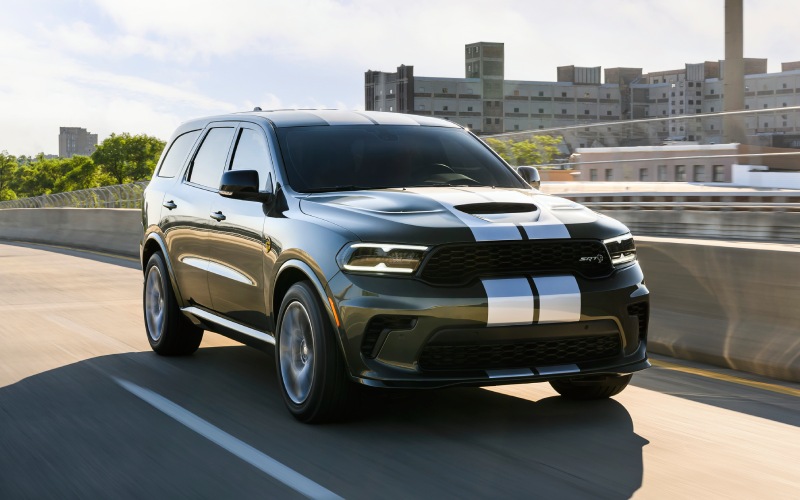
If towing confidence is your top priority, the 2026 Dodge Durango takes the win by a wide margin. Properly equipped, Durango offers Best-in-Class available towing up to 8,700 pounds on HEMI® V8 models with Tow ‘n Go and on SRT® Hellcat models. Even its standard V6 configuration can manage up to 6,200 pounds when properly equipped. The 2026 Chevrolet Traverse, by comparison, delivers a solid 5,000-pound rating with its single 2.5L turbocharged four-cylinder and standard trailering equipment. For families planning a camper trip to Lake Whitney, hauling a pair of PWCs, or pulling a small livestock trailer out past China Spring, that extra capacity and the Durango’s trailering-focused hardware make day-to-day towing feel easier and safer.
Of course, there’s more to the story than the maximum number. Towing is about stability, cooling, braking, gearing, and driver assistance that actually helps when the load pushes back. Here’s how both SUVs stack up for real-world trailering around Central Texas.
Powertrains and pulling power
The Durango gives you a true choice of personalities. The 3.6L Pentastar® V6 (295 hp) is relaxed and capable; the 5.7L HEMI® V8 (360 hp/390 lb-ft) brings that unmistakable low-end shove; and the Supercharged 6.2L HEMI® V8 in the SRT® Hellcat (710 hp/645 lb-ft) is in a class of one. All pair with an eight-speed automatic tuned for smooth, decisive shifts under load, plus available paddle shifters for manual control when descending grades on TX-6 or easing down a ramp at the marina. The Traverse uses a single 2.5L turbo four (up to 328 hp/326 lb-ft) and an eight-speed automatic. It’s energetic and efficient for daily driving in town, but the Durango’s V8 torque—especially with the Tow ‘n Go package—delivers more confident launches and steadier highway merges with a trailer in tow.
Towing technology and chassis control
On the Durango, the available Trailer Tow Group IV and Tow ‘n Go package go far beyond a hitch and wiring. You can add integrated Trailer Brake Control, an Electronic Limited Slip Rear Axle, Bilstein® Active Damping High-Performance Suspension, and drive modes tailored to Sport, Track, Tow, and Snow. Trailer Sway Control comes standard, applying brake pressure and throttle adjustments to keep the SUV and trailer in harmony when a gusty crosswind hits between Waco and Hillsboro. The Chevy Traverse counters with a confident base setup and, on Z71, an Advanced Twin-Clutch AWD system, Hill Descent Control, and frequency-based dampers that smooth out rough county roads. It’s capable for light off-pavement exploring, but it doesn’t offer the same breadth of trailering-specific chassis tools you can dial up on the Durango.
Visibility, braking, and downhill confidence
Durango’s available Brembo® performance brakes on SRT® applications underscore how serious Dodge is about managing speed with a load. Even if you’re not eyeing the Hellcat, generous rotor sizing and firm pedal feel inspire confidence backing a boat down a wet ramp or checking speed on an extended downhill. The ParkView® Rear Back Up Camera provides a crisp view with dynamic gridlines, and available Blind Spot Monitoring with Trailer Tow Detection looks alongside your trailer to help with lane changes. The Traverse can be equipped with helpful visibility upgrades—like available HD Surround Vision—and robust standard active safety via Chevy Safety Assist, but its braking and trailer-specific blind-spot solutions are not engineered to the same specialty level you’ll find in a Durango configured for towing.
Ride, handling, and day-to-day comfort while towing
Balance is a Durango hallmark. The short/long arm front and multi-link rear suspension keep things composed on I-35 expansion joints, and when you add Bilstein® damping plus the wider 295-section tires available with Tow ‘n Go, the steering feels calm and precise even when the trailer tugs. Drive modes can soften responses for slick roads or sharpen them when you need to get around slow traffic before a passing lane closes. The Traverse rides comfortably, especially on Z71 with frequency-based dampers, and its Twin-Clutch AWD helps put down power cleanly on loose surfaces. Towing manners remain tidy for lighter campers and utility trailers, but if your gear creeps toward the upper end of midsize loads—or you tow often—the Durango feels less taxed.
Ownership considerations: the stuff you notice after six months
When you tow regularly, little things become big advantages. Durango’s available 115-volt outlet and multiple USB Type A-C ports keep phones, cameras, and tire inflators powered. Uconnect® 5 with an available 10.1-inch touchscreen supports multiple user profiles, so your preferred camera view, audio, and climate presets load the moment you start the SUV. And with over 50 seating configurations, you can keep a cooler, tool bag, and recovery straps organized on solo tow days, then flip back to family hauling in minutes. The Traverse’s Google built-in integration is excellent for maps and voice control, its cargo area is massive with seats down, and the AutoSense Power Liftgate is a convenience hit. For towing-focused owners, the Durango’s accessory ecosystem and towing-first packaging are simply more robust.
- Max towing difference: Durango up to 8,700 lbs available vs. Traverse 5,000 lbs standard with trailering equipment.
- Powertrain breadth: Durango offers V6, HEMI® V8, and Supercharged 6.2L HEMI® V8; Traverse uses a single 2.5L turbo engine.
- Chassis tuning: Durango available Bilstein® damping, eLSD, Tow ‘n Go drive modes; Traverse Z71 brings Twin-Clutch AWD and Terrain Mode.
- Towing safety: Durango available Blind Spot Monitoring with Trailer Tow Detection; Traverse features robust Chevy Safety Assist with available visibility tech.
Frequently Asked Questions:
Can the 2026 Chevrolet Traverse handle a family camper?
Yes, within reason. With up to 5,000 pounds of standard towing when equipped, the Traverse is well-suited to pop-up campers, small fiberglass trailers, and light cargo hauls. If your camper and gear push beyond that range—or you plan to tow in hilly areas frequently—the Durango’s higher ratings and trailering hardware provide more margin.
Which Durango configuration is best if I tow a boat on weekends?
For frequent tow days, the 5.7L HEMI® V8 with the available Tow ‘n Go package hits a sweet spot: confident torque, up to 8,700 pounds of available towing when properly equipped, Bilstein® damping, eLSD, and tow-calibrated drive modes. If you want maximum muscle or plan to move heavier loads, the SRT® Hellcat is unmatched in this class.
Does the Traverse’s Twin-Clutch AWD help when launching a boat?
It can. The Z71’s Twin-Clutch AWD can apportion torque to the wheel with grip, which is useful on slick ramps. The Durango’s available AWD systems and eLSD perform a similar role, and the Tow ‘n Go calibration layers in additional control through suspension and drive mode tuning.
Still deciding between these two? Our team at Hillsboro Chrysler Dodge Jeep Ram is glad to walk you through tow ratings, packaging, and real-world fit for your trips. We’re proudly serving Waxahachie, Waco, and Cleburne with comparison drives, detailed walkarounds, and straightforward guidance so you can choose with confidence.